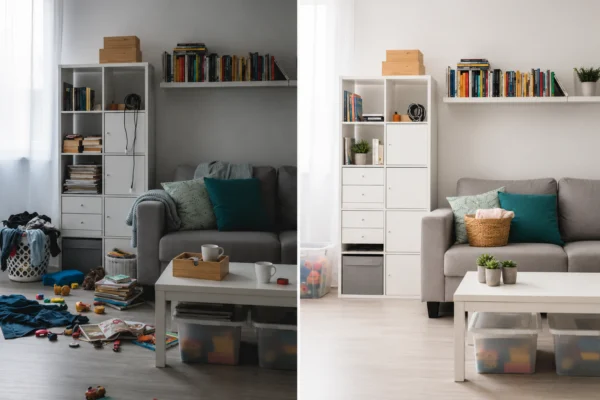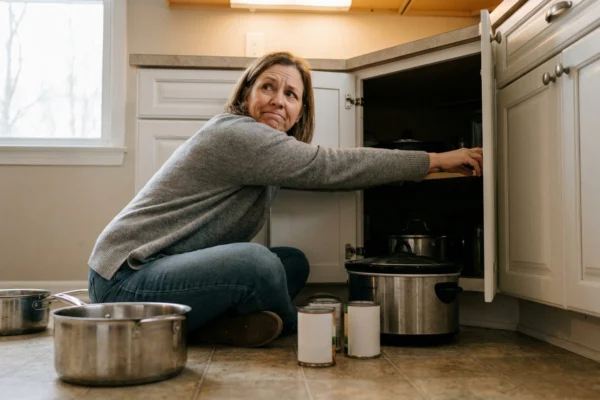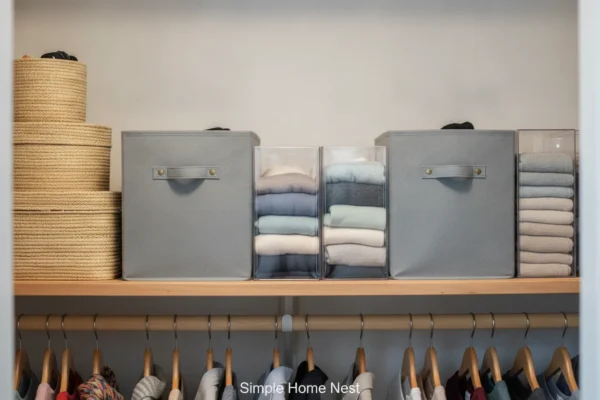

Ever wondered why opening a cluttered closet door feels like a physical punch to your energy? You are not lazy, and you are not failing. Science proves that physical chaos directly triggers cortisol—the stress hormone—flooding your brain with anxiety and paralyzing your ability to start. But what if you could melt away that suffocating overwhelm and reclaim your space in just 15 minutes a day, without throwing your life into chaos? Here is the exact roadmap to rescue your home and your peace of mind.
Do you look at your messy rooms and feel instantly paralyzed by the sheer volume of stuff? If so, you are definitely not alone, as clutter actually triggers stress hormones in our brains.
The secret is learning how to declutter when overwhelmed without losing your peace of mind, using simple methods that anyone can master in just a few minutes a day.
Why Decluttering Feels So Overwhelming
Physical messes and mental exhaustion are deeply connected, creating a toxic cycle that makes it incredibly hard to take the first step. When your surroundings are chaotic, your brain constantly processes excess visual information, leading to rapid cognitive fatigue.
In practice, we notice that beginners often get stuck because they try to solve the entire house at once. This all-or-nothing mindset causes immediate anxiety and stops progress before it even starts.
“An ordered space is a form of self-care, but reaching it should never come at the cost of your mental peace. Take it one tiny step at a time.” — Sarah Jenkins, Home Wellness Consultant
When you need to declutter when overwhelmed, realizing that perfection is not the goal helps release the pressure. It is completely normal to feel stressed, but accepting that a partial job is infinitely better than nothing changes your entire approach.
Understanding this mental barrier allows us to shift our focus from the whole house to tiny, manageable tasks. By lowering your expectations for how much you should get done in a single day, you can actually build the momentum needed to declutter when overwhelmed.
How to Declutter When Overwhelmed in Minutes
The easiest way to break the paralysis is by starting with micro-decluttering sessions that require very little energy or time. You do not need a free weekend to make a massive difference in your living environment.
Spending just ten to fifteen minutes a day can create noticeable progress over time without leaving you completely exhausted. Set a physical timer on your phone, put on your favorite music, and focus only on one tiny area until the alarm goes off.
This approach helps you declutter when overwhelmed by securing quick, easy wins that boost your confidence. You might clear off a single coffee table or empty one small junk drawer, which immediately improves how the room feels.
Over a few weeks, these brief sessions add up to massive changes, proving that consistency matters far more than intensity. When you declutter when overwhelmed in short bursts, you protect your energy and prevent the dreaded decision fatigue.
The One Box Method for Fast Progress
A major mistake people make is emptying an entire closet onto the floor, only to realize they do not have the energy to finish. This creates a bigger mess, spikes anxiety, and leaves you feeling completely defeated.
To avoid this trap, use a single-box sorting strategy that keeps the process tightly controlled and prevents the mess from spreading. Grab one medium-sized cardboard box and focus strictly on one small container, shelf, or drawer at a time.
As you work, only handle items from that specific spot, deciding immediately if they belong in the box for donation or back on the shelf. This method keeps your focus narrow and ensures you can walk away at any moment without leaving a disaster behind.
In practice, we observe that keeping your workspace confined to a single box makes it much easier to declutter when overwhelmed. If you get interrupted, you can simply close the box and resume whenever you are ready.
Simple Rules to Decide What to Keep
Making decisions about your belongings can be emotionally draining, especially when feelings of guilt or regret get in the way. To keep the process quick and straightforward, you need realistic, guilt-free questions to evaluate your items.
Instead of thinking about how much an item cost or imagining unlikely future scenarios, focus on your current lifestyle needs. Ask yourself if the item has served you in the past year, or if it actively helps you run your household today.
For most beginners, separating utility from sentimental value is the hardest part of trying to declutter when overwhelmed. If you keep something out of obligation rather than usefulness, it is simply taking up valuable physical and mental space.
Be gentle with yourself, but stay honest about what actually fits into your current daily routines. If an item does not serve a clear purpose, it is ready to find a new home where it can be appreciated.
A Room by Room Guide for Beginners
The best way to maintain clarity and structure is to break down your home into manageable zones, starting with high-impact but low-emotion areas. This prevents emotional attachment from slowing down your progress early on.
For those managing small space living setups, tackling zones systematically makes the entire environment feel lighter almost instantly.
- The Entryway: Clear out expired coupons, broken umbrellas, shoes that do not fit, and old mail that accumulated near the door.
- The Bathroom: Safely discard expired medications, old makeup, half-empty bottles, and worn-out towels you no longer use.
- The Kitchen: Remove chipped mugs, duplicate cooking utensils, expired pantry items, and plastic containers missing their lids.
- The Bedroom: Focus on nightstands first, removing empty water glasses, old books, and receipts to create a restful sleeping space.
Starting with these practical zones builds your decision-making muscles before you tackle more sentimental areas like old photos or letters. Using a structured list ensures you always know exactly what to do next when you declutter when overwhelmed.
For a deeper look at managing your space systematically, check out this comprehensive guide on home organization for beginners.
How to Manage the Influx of New Items
Decluttering is not a one-time event; it is an ongoing habit of managing what comes into your living space. To prevent clutter from returning once a room is clean, you must establish simple, sustainable routines.
One helpful method is the one-in, one-out rule, which ensures that for every new item you bring home, an old one must leave. This simple boundary naturally controls the volume of stuff in your house without requiring constant inventory checks.
Another excellent habit is setting up a permanent donation station, such as a sturdy basket in your closet or entryway. Whenever you come across an item you no longer want, drop it in the basket immediately so it does not clutter your surfaces.
When the basket is full, take it directly to your local charity or drop-off center to keep things moving. Making these routines a natural part of your week ensures you never have to declutter when overwhelmed by a massive buildup again.
To learn more about sustainable living habits and waste reduction, you can find excellent resources on the EPA website or explore community sharing ideas on the Buy Nothing Project platform.
Embrace a Simpler and Cozy Home Today
Taking control of your environment does not require hours of exhausting work or a complete lifestyle overhaul. By embracing tiny, daily changes and letting go of perfection, you can easily declutter when overwhelmed and design a peaceful space.
Ready to transform your living space into a calm haven? Start with just one drawer today, and watch how quickly your home begins to feel lighter and more welcoming.
Frequently Asked Questions about how to declutter when overwhelmed
Why does clutter make us feel so anxious and paralyzed?
Clutter triggers stress hormones in our brains because physical messes and mental exhaustion are deeply connected. When our surroundings are chaotic, our brains must constantly process excess visual information, which leads to fatigue, anxiety, and a feeling of complete paralysis.
How can I start to declutter when overwhelmed without feeling stressed?
The best way to declutter when overwhelmed is by starting with micro-decluttering sessions of ten to fifteen minutes. Setting a physical timer and focusing strictly on one tiny area, like a single coffee table, secures quick wins without draining your energy.
What are the mental benefits of clearing your space slowly?
Clearing your space slowly acts as a powerful form of self-care that protects your mental peace. By lowering your expectations and accepting that a partial job is better than perfection, you build positive momentum and successfully prevent dreaded decision fatigue.
Is it better to organize the whole house at once or use the One Box Method?
Trying to organize the entire house at once is a mistake that causes immediate anxiety and stops progress. In contrast, using the One Box Method focuses on one small shelf at a time, keeping the process controlled and preventing messes from spreading.
Is it a myth that you need an entire free weekend to declutter?
Yes, it is a complete myth. You do not need a free weekend to make a difference; spending just minutes a day creates massive progress over time, proving that consistency matters far more than intensity when organizing a messy home.