You bought a spin mop and bucket to escape the old string mop, the one that came out of the wringer still dripping and left the kitchen tacky for an hour. A few months in, the head is fraying, the pedal squeaks, and the floor still dries streaky. The easy conclusion is that the whole category is a gimmick.
It is not. But the gap between a good one and a bad one is not the brand on the handle. It is three parts most listings barely describe: how the wringer controls water, what the mop head is made of, and whether the bucket keeps dirty water away from the clean side. Get those right and the floor dries in minutes. Get them wrong and you are pushing gray water around.
This guide breaks down what actually separates the two, which type fits which home, who should skip the category entirely, and a seven day test that tells you whether your floors are even suited to one.
As an Amazon Associate I earn from qualifying purchases.
What a spin mop and bucket does better than a string mop
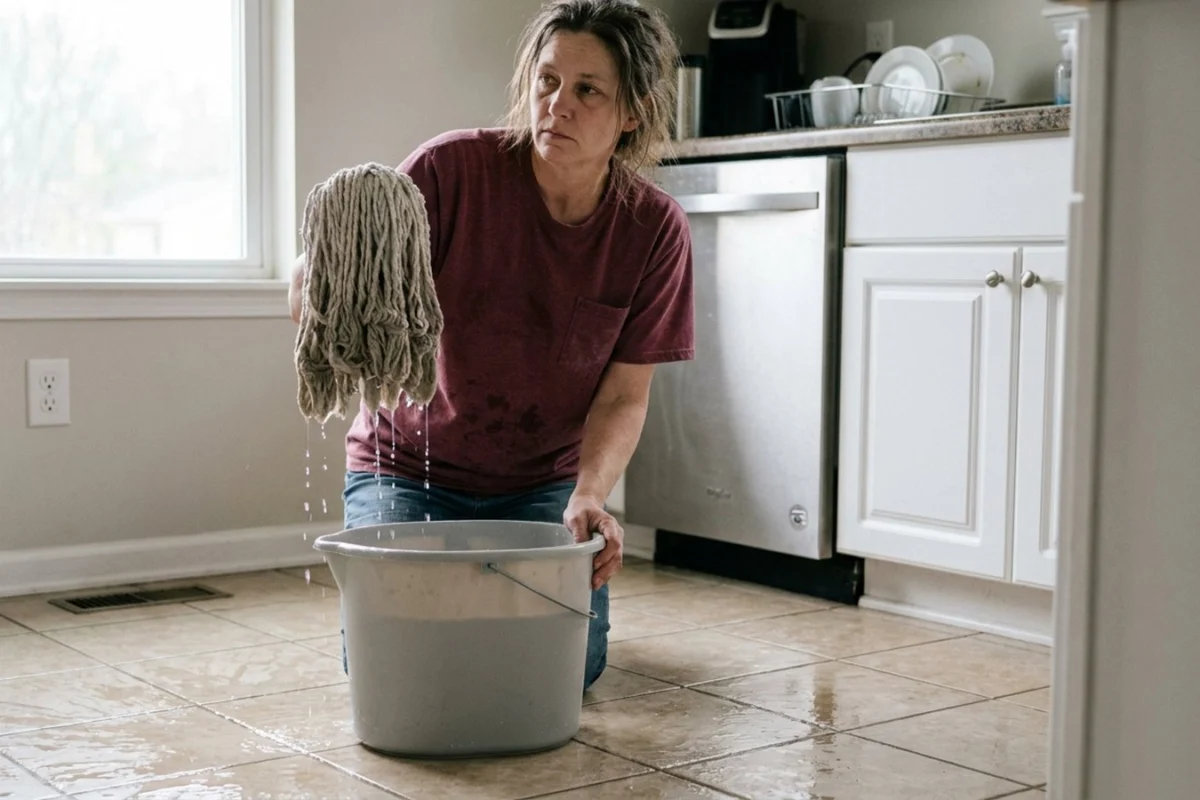
The symptom: with an old string mop, the floor stays visibly wet after you pass, dries with streaks, and the bucket water turns gray within two rooms.
Why it happens: a twist wringer on a string mop leaves a lot of water in the fibers, so you are laying down more liquid than the floor can evaporate quickly. Worse, you keep dunking the dirty head back into the same bucket. A US EPA case study of hospital custodial programs describes exactly this problem, noting that conventional mopping requires changing the cleaning solution every two or three rooms to limit cross contamination, and that a full bucket of solution can weigh 30 pounds or more and has to be lifted. Home kitchens are smaller, but the mechanism is identical: the water you clean with stops being clean.
The adjustment: a centrifugal wringer spins the head fast enough to throw water out of the fibers, so you control how damp the mop is instead of hoping the wringer squeezed enough. That single change is what makes floors dry faster, and it is the reason the category exists.
Microfiber matters here too. The same EPA study reports that microfiber mop programs use 95% less water and cleaning chemicals per 100 rooms per day than conventional wet loop mops, and describes the fibers as roughly one sixteenth the thickness of a human hair, able to hold six times their weight in water. One honest caveat: research comparing microfiber to cotton in professional settings has produced mixed results, and the EPA study itself points at the reason. The advantage comes largely from not returning a soiled head to the clean solution. The fiber alone does not save a routine where the water is never changed.
The three parts that decide if it works
The wringer, which is the whole product
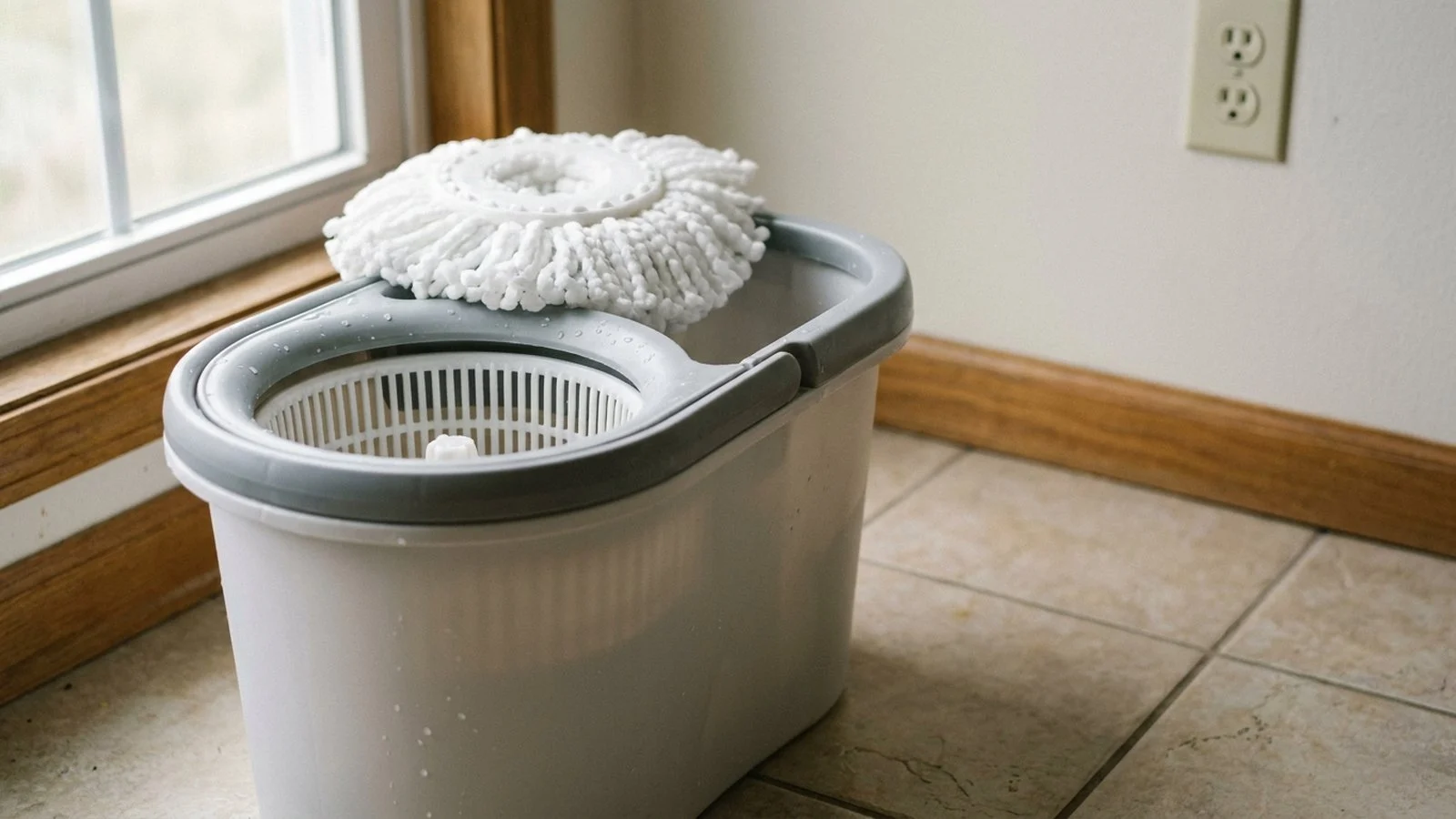
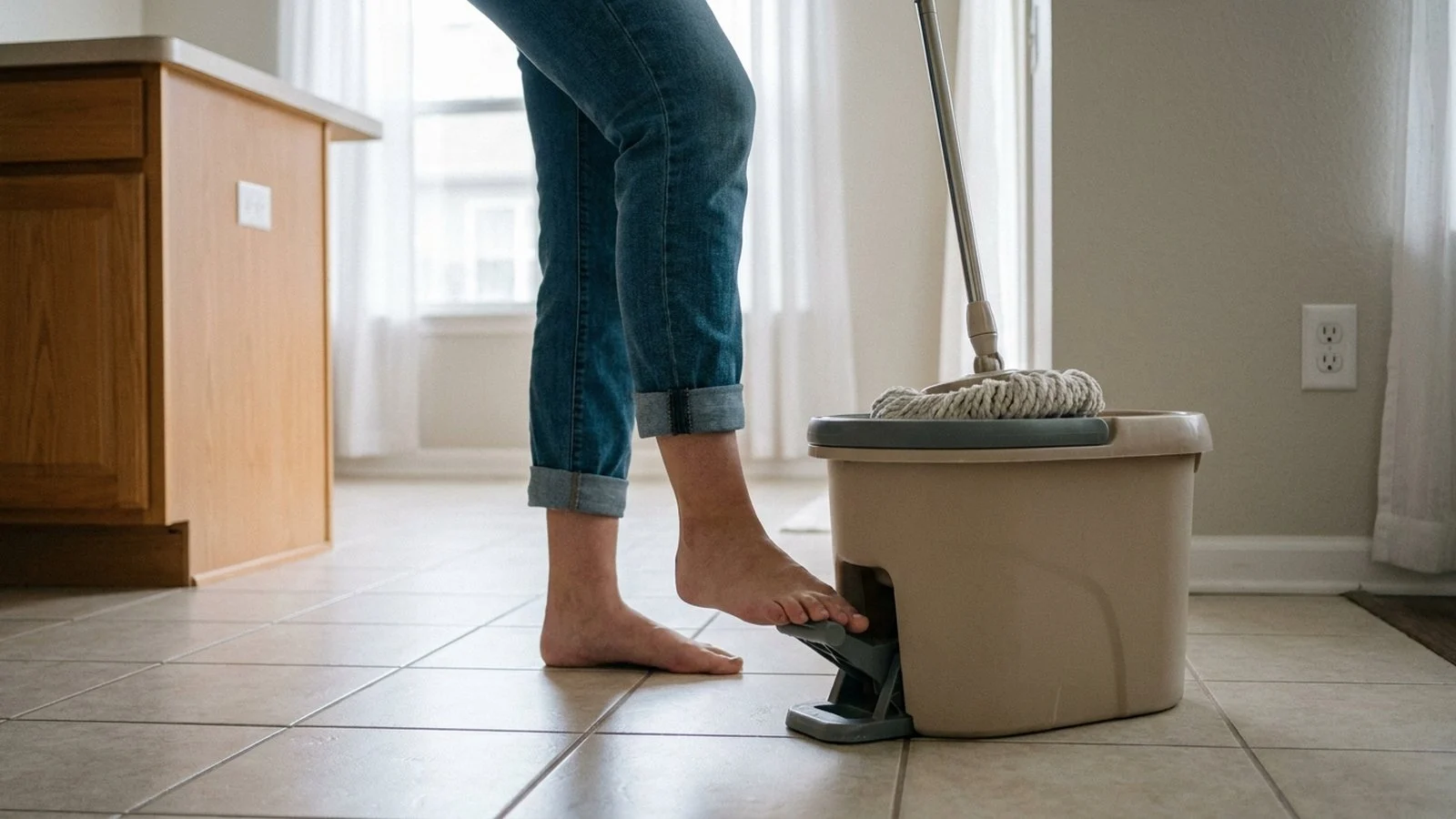
Pedal driven wringers let you spin without bending or using your hands, and they let you stop at a chosen dampness. Hand press models, where you push the handle down to drive the spin, cost less and have fewer parts to fail, but they need upper body effort and are harder to control precisely. The failure point on both is the same: the pedal linkage or the spin shaft. If a product fails early, it is almost always here, not in the mop head.
Look for a wringer basket that stays fixed to the bucket rather than lifting out loose, and for a pedal with a metal rather than plastic pivot where the listing states it.
The mop head and the cost of refills
Round microfiber heads are the standard. What varies is density and whether replacements are easy to buy. A cheap system with heads nobody stocks becomes disposable in a year. Before buying, check that refill packs exist for that specific model.
Heads need washing, not rinsing. Wash them separately from towels, skip fabric softener because it coats the fibers and kills absorbency, and replace them when they stop gripping rather than when they look dirty.
The bucket, and whether it separates dirty water
Single chamber buckets are simple and cheap, and everything you lift off the floor goes back into the water you are about to use. Two chamber buckets keep a rinse side and a clean side apart, which is the closest a home setup gets to the practice the EPA study describes. They cost more, take more storage space, and are heavier when full, which matters if you carry the bucket up stairs.
Capacity is a trade off, not a feature. A bigger bucket means fewer refills and a heavier lift.
Which type fits which home, and who should skip it
Prices in this category move constantly with sales, so treat the bands below as rough positioning rather than fixed numbers, and check the current price before deciding.
Single bucket pedal systems. The default choice, usually the entry tier around the twenty to thirty five dollar range. Worth it for tile, vinyl, laminate, and sealed floors in an apartment or a small house. Not worth it if you clean more than roughly a thousand square feet at a time, because you will be changing water constantly. The trade off is simplicity against water hygiene.
Two chamber systems. Usually mid tier, often in the forty to seventy dollar range. Worth it for larger homes, homes with pets, or anyone who has looked at the bucket water and felt uneasy about it, which is the same reason pet households need different equipment for carpet. Not worth it in a studio or a small apartment where storage space costs more than the benefit. The trade off is weight and bulk against genuinely cleaner rinse water.
Hand press systems without a pedal. Cheapest tier and mechanically simplest. Worth it if a pedal has already broken on you, or if you want the fewest moving parts. Not worth it for anyone with wrist, shoulder, or back limitations, since you supply the force yourself. The trade off is durability against physical effort.
Flat microfiber systems with a press wringer. These are not spin mops in the strict sense, but they compete for the same job and often sit at the higher end. Worth it for hardwood and for anyone who needs tight control over how little water reaches the floor. Not worth it for textured tile or deep grout lines, where a round head reaches better. The trade off is reach against precision.
Skip the category altogether if your home is mostly carpet with a small tile entry. A bucket system is overkill there, and a damp cloth or a small handheld tool does the job.
The 7-day test that tells you if your floors suit one
Before spending anything, run this. It costs nothing and answers the question for your specific floors rather than for floors in general.
- Day 1: pick your worst floor area, sweep or vacuum it fully, then wipe a one meter square with a barely damp microfiber cloth. Time how long it takes to dry completely.
- Day 2: repeat on the same square, this time with the cloth clearly wet, close to what a poorly wrung mop leaves. Time the dry again and look at the edges and seams.
- Days 3 to 5: clean normally with whatever you own now. Each time, look at the bucket or rinse water after the first room. If it is visibly gray that early, your problem is water hygiene, and a two chamber bucket is the fix.
- Day 6: check your floor type honestly. Run a finger along a seam or plank joint. If you can feel a gap, water is getting in there every time you mop.
- Day 7: compare. If the damp pass on Day 1 dried in a few minutes and left no streak, a spin mop suits your floors and you mainly need wringer control. If Day 2 pooled at the seams or took a long time, you need a system built for minimum moisture, not a bigger bucket.
One rule the test will reinforce: always dry clean the floor first. The National Wood Flooring Association warns that skipping that step traps insoluble particles of dirt and sand under the pad, which then scratch the floor. Sweeping is not optional, and the same principle explains why dust keeps returning to a home that gets cleaned often.
When it’s not the right tool for your floor
Most homes are fine. A few situations are not, and no amount of wringer engineering changes that.
Solid and engineered wood. This is the big one. The National Wood Flooring Association is direct about it: never leave your wood floors wet, because excess water can seep into the seams and damage the wood. It says plainly that traditional string mops and buckets put too much water on wood floors, which can penetrate through seams into deeper layers and cause moisture damage. Its own recommendation is a damp mop rather than a soaking one, working in small sections and rinsing frequently. A spin mop wrung nearly dry can meet that standard, but the bucket format tempts you toward more water, not less. If your home is mostly wood, buy for minimum moisture and follow the finish manufacturer guidance.
Unsealed stone, unglazed tile, and porous concrete. These absorb water and any cleaner in it. Sealing comes first, mopping second.
Deep textured or heavily grouted tile. A round head skates over the low points. Grout lines need a brush or a steam tool, not more passes.
Homes where the real issue is clutter. If mopping is hard because you are moving objects the whole time, the equipment is not the constraint. Clearing the floor first, using something like a simple room by room organizing plan, changes the job more than any mop.
Read also
- Simple cleaning routine for a tidy home: a room by room guide
- Why is my house so dusty: causes and how to reduce it
- Best carpet cleaner with pets: spot cleaners vs upright units
- Home organization for beginners: a simple room by room guide
Sources
- National Wood Flooring Association, How to Clean and Take Care of Your Wood Floors
- US EPA Region 9, Using Microfiber Mops in Hospitals (case study, PDF)
- US EPA, Sources of Indoor Particulate Matter (PM)
Perguntas frequentes
Is a spin mop and bucket better than a regular string mop?
For most sealed hard floors, yes, mainly because the spin wringer lets you control how damp the head is instead of leaving it soaking. The other gain is hygiene: the less you return a dirty head to the clean water, the less you spread what you just picked up.
Can I use a spin mop on hardwood floors?
Only wrung nearly dry, and with care. The National Wood Flooring Association warns never to leave wood floors wet, because excess water seeps into the seams and damages the wood, and it notes that traditional mops and buckets put too much water down. If your home is mostly wood, choose a system built for minimum moisture and follow the finish maker guidance.
How often should I replace the mop head?
Replace it when it stops gripping rather than on a fixed schedule, usually somewhere between three and six months of regular use. Wash heads separately, and skip fabric softener because it coats the fibers and reduces how much they absorb.
Is a two chamber bucket worth the extra cost?
It is worth it in larger homes and pet households, where the rinse water turns gray fast. In a studio or small apartment the extra bulk and storage space usually outweigh the benefit, and changing the water more often achieves much the same thing.
Why does my floor still look streaky after mopping?
Three common causes: too much water left on the floor, too much cleaning product, or a head that is saturated with old residue. Try wringing tighter, cutting the amount of product, and washing or replacing the head before blaming the mop.