Stop watering. That single change does more against fungus gnats than anything you can spray, and it works because the insects you are swatting are not the problem. If you want to know how to get rid of gnats in houseplants and keep them gone, let the top two inches of soil dry out completely before the next watering, and start today.
As an Amazon Associate I earn from qualifying purchases.
The reason gnats feel impossible to beat is that most people fight the wrong stage of the insect. You see the adults, so you kill the adults. Meanwhile the eggs and larvae sit in the wet soil, untouched, hatching on a schedule you cannot see. A week later the cloud is back and it feels like nothing worked.
Below is what these insects actually are, why the adults are a distraction, the three treatments that reach the larvae where they live, and a seven day plan to break the cycle for good.
How to get rid of gnats in houseplants: start with the top two inches
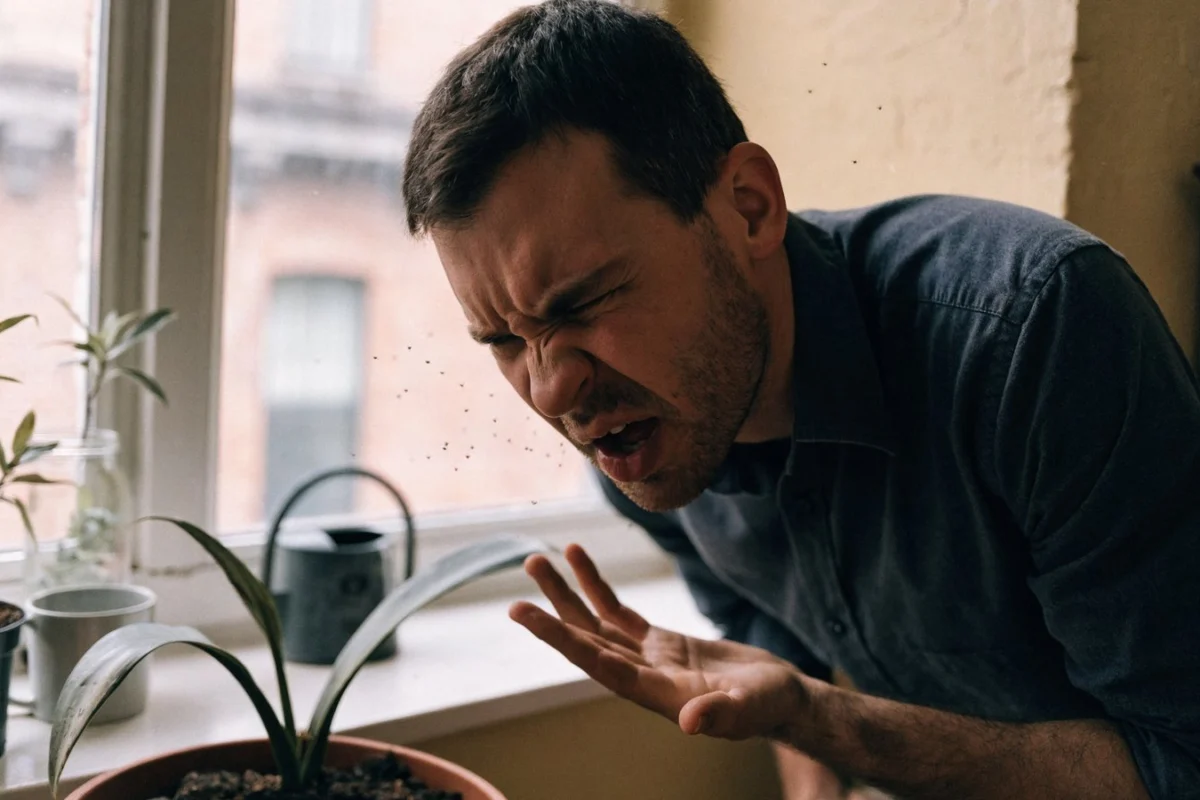
The symptom: small dark flies rising from the pot every time you walk past or water.
Why it happens: fungus gnat larvae live in the growing medium and depend on it staying damp. Colorado State University Extension is direct about the priority here: allowing the growing medium to dry between waterings, especially the top one to two inches, is the most important strategy for minimizing problems, because it reduces the survival of eggs and larvae.
That top layer is the nursery. Deeper soil can stay slightly moist and the plant will be fine. The surface is what decides whether the next generation lives.
The fix: push a finger two inches into the pot before every watering. If you feel any moisture, wait. Most houseplants tolerate this easily, and the ones that do not are usually sitting in the wrong pot rather than needing more water.
What fungus gnats actually are
They are small dark winged flies in the Bradysia genus, which is why you will see them called dark winged fungus gnats. The adults fly, the larvae do not, and the two stages cause completely different amounts of trouble.
According to Colorado State University Extension, the larvae feed primarily on fungi, algae and decaying plant matter, though they will also consume roots and leaves. That same source classifies them as minor pests of houseplants.
The Missouri Botanical Garden describes a harder edge to the same insect: larvae feeding on roots can stunt plant growth, yellow the foliage and cause leaves to drop, with the damage being most serious in greenhouses and nurseries growing young plants. It also notes they can move plant pathogens around.
Both things are true, and the difference matters for you. A mature pothos in a living room is unlikely to be harmed. A tray of seedlings or a freshly propagated cutting is a different situation entirely. Judge the risk by how young and how small the root system is, not by how many flies you see.
Why killing the adults never works
The symptom: you spray, the flies disappear, and eight or ten days later they are back in the same numbers.
Why it happens: the full cycle from egg to adult takes about three to four weeks at normal indoor temperatures of 65 to 75 degrees Fahrenheit, according to Colorado State University Extension. When you kill the visible adults, every egg and larva already in the soil continues developing on that schedule. What you interpret as a treatment failure is simply the next batch arriving on time.
This is also why a single application of anything rarely works. You are dealing with overlapping generations in the same pot.
The fix: plan for three to four weeks of consistent pressure, not one weekend of effort. Anything that only touches adults must be paired with something that reaches the soil.
The three treatments that reach the larvae
Drying the surface. Free, and the one Colorado State calls most important. It does not kill instantly, it starves the next generation. Everything else works better on top of it.
Bacillus thuringiensis israelensis, sold as Bti. The Missouri Botanical Garden describes it as effective against larvae in potted plants, but adds two limits worth knowing before you buy: it stays toxic for about two days, and it does not kill the egg laying adults. That means repeated applications, not one drench.
Beneficial nematodes. The Missouri Botanical Garden lists Steinernema feltiae applied as a soil drench among the biological controls. Slower and more expensive than Bti, and worth it mainly when you have many pots.
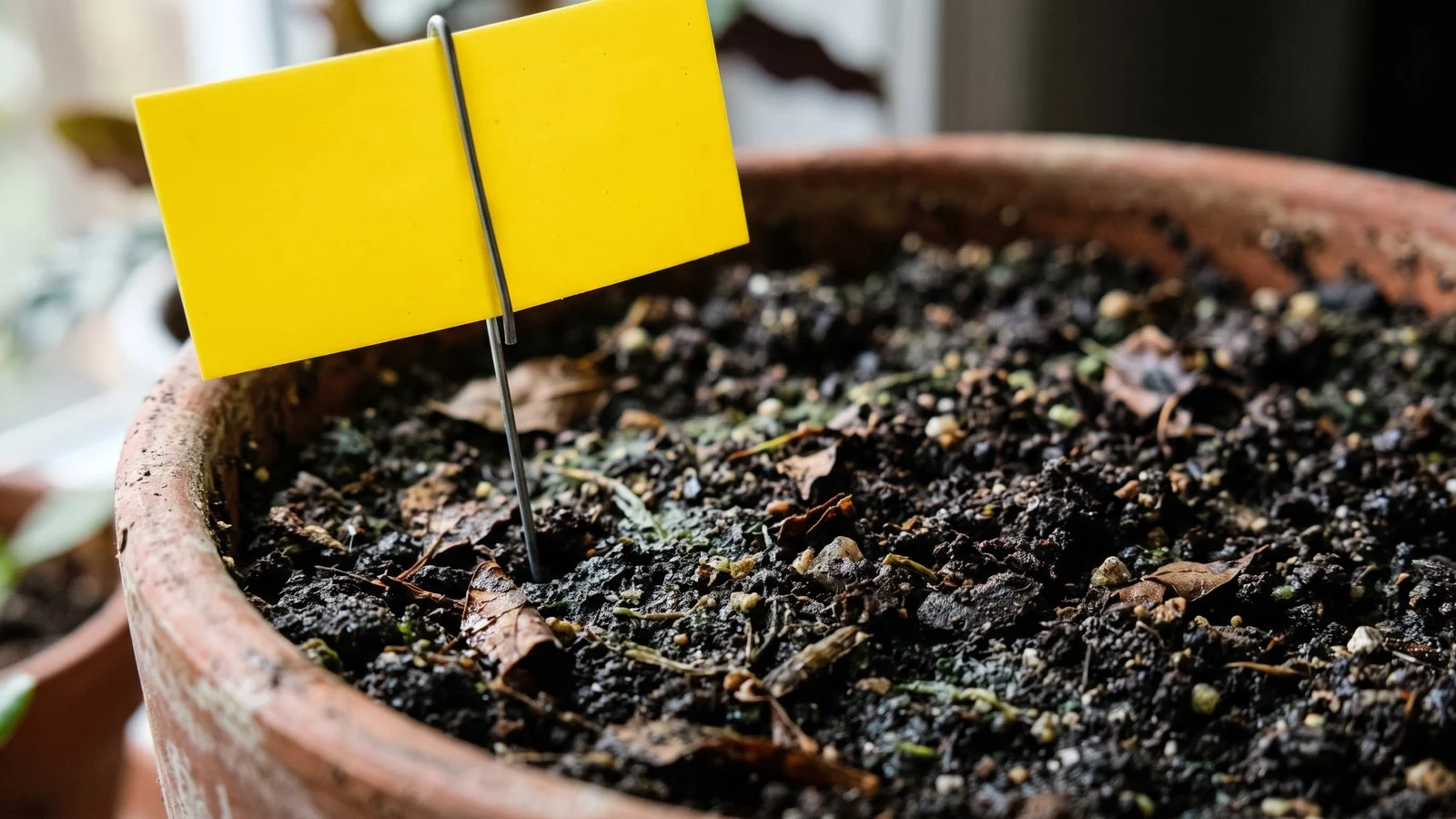
Yellow sticky traps belong in a separate category. Colorado State notes that adults are attracted to yellow and get captured on the sticky cards, which reduces future generations of larvae. They are genuinely useful, but treat them as monitoring and population reduction, not as your treatment. If the traps are your only tactic, you are back to fighting the wrong stage.

The 7-day plan to break the cycle
Reading about gnats changes nothing. Running the plan does, because it forces the one variable that matters.
- Day 1, find the wet pots. Push a finger two inches into every pot in the house. Write down which ones are damp. That list is your actual problem, and it is usually shorter than you expect.
- Day 2, stop watering those pots. Only the damp ones. Plants in dry pots continue on their normal schedule.
- Day 3, place the traps. Put a yellow sticky card at soil level in each infested pot. Count roughly how many adults it catches. This number is your baseline.
- Day 4, remove the debris. Clear fallen leaves and dead plant matter from the soil surface. That decaying material is part of what the larvae eat.
- Day 5, first Bti application. If you are using it, apply as a soil drench following the label. Remember that it stays active for roughly two days.
- Day 6, check the traps again. Compare with day 3. Fewer adults means the surface drying is already working. The same or more means some pot is still staying wet.
- Day 7, set the calendar. Mark repeat Bti applications and a trap check every week for the next month. The cycle is three to four weeks, so your effort has to outlast it.
What you get at the end is a specific answer about your home, not a general opinion. If the traps are emptier and one pot is still producing flies, you have found the pot that is being overwatered.
When it’s not fungus gnats
Not every small flying insect indoors comes from a plant pot. This explanation does not apply here:
- The flies gather near fruit, the sink or the trash. Those are almost certainly fruit flies, which breed in food residue and drains, not in soil. Drying your pots will do nothing.
- They are in the bathroom near the drain. Drain flies breed in the film inside pipes and need a completely different approach.
- The plant is declining but you see no flies. Root rot from overwatering looks similar and often travels with the same conditions. Check the roots.
- The insects are on the leaves rather than in the air. Aphids, whiteflies and spider mites live on foliage and need a foliar treatment.
- You brought the plant home this week. The infestation likely came with the potting mix from the store, and repotting into fresh medium is faster than treating.
Frequently asked questions
How do I get rid of gnats in houseplants for good?
Stop treating the adults and target the larvae in the soil. Colorado State University Extension identifies letting the growing medium dry between waterings, especially the top one to two inches, as the most important strategy, because it reduces survival of eggs and larvae. Pair that with yellow sticky traps for the adults and a larvicide such as Bti if the infestation is heavy, and keep it up for three to four weeks.
Why do the gnats keep coming back after I kill them?
Because the full cycle from egg to adult takes about three to four weeks at normal indoor temperatures of 65 to 75 degrees Fahrenheit. Killing the visible adults leaves every egg and larva in the soil developing on schedule, so a new batch appears about a week later. It looks like the treatment failed when it simply never reached the stage that matters.
Do fungus gnats actually damage plants?
It depends on the plant. Colorado State University Extension calls them minor pests of houseplants, noting the larvae feed mainly on fungi, algae and decaying plant matter. The Missouri Botanical Garden describes larvae feeding on roots stunting growth, yellowing foliage and causing leaf drop, with the worst damage in greenhouses and nurseries growing young plants. A mature houseplant is usually fine. Seedlings and fresh cuttings are genuinely at risk.
Does Bti work on fungus gnats?
The Missouri Botanical Garden describes Bacillus thuringiensis israelensis as effective against larvae in potted plants, with two important limits: it remains toxic for about two days and it does not kill the egg laying adults. That means repeated applications rather than a single drench, and it should be combined with drying the soil surface.
Are yellow sticky traps enough on their own?
No. Colorado State University Extension notes that adults are attracted to yellow and get captured on sticky cards, which does reduce future generations. But traps only reach the flying stage. If the soil stays damp, larvae keep developing and the traps will fill forever. Use them for monitoring and population reduction alongside a soil strategy.
How can I tell fungus gnats from fruit flies?
Location is the fastest test. Fungus gnats rise from plant pots and are dark and slender with long legs. Fruit flies gather around fruit, the sink and the trash, and tend to be rounder and lighter. If drying your plant soil changes nothing and the insects hover near food or drains, you are dealing with a different pest entirely.
Read also
- Indoor plants for beginners: a simple care guide for small homes
- Best indoor plant pots and how drainage changes watering
- Low light plants for apartments
- A simple cleaning routine for a tidy home
Sources
- Fungus gnats as houseplant and indoor pests, Colorado State University Extension. Genus Bradysia, larval feeding, the three to four week cycle at 65 to 75 degrees Fahrenheit, drying the top one to two inches, and yellow sticky traps.
- Fungus gnats, Missouri Botanical Garden. Root feeding and plant damage, Bti effectiveness and its two day activity window, and Steinernema feltiae nematodes.
Note: this article is informational and based on university extension and botanical garden guidance available at the time of writing. Always follow the label on any product you apply, including biological controls, and check the specific needs of your plant before changing its watering schedule. This post contains affiliate links. As an Amazon Associate I earn from qualifying purchases, at no extra cost to you.